Thinking about repainting your exterior, adding a lanai, or breaking ground on a new build in Princeville? The design review process can feel complex if you’re new to community associations and Kauai County permitting. You want to protect your vision, your timeline, and your investment. This guide gives you a clear path through Princeville’s HOA design review, from what to submit and when, to common pitfalls and how to avoid them. Let’s dive in.
How design control works in Princeville
Princeville is a planned community governed by recorded CC&Rs and design guidelines. Most properties fall under a master association along with a sub‑association. Always verify exactly which set of rules applies to your lot or condominium unit before you plan work.
Approvals work on two tracks. You typically need HOA or Architectural Review Committee approval and the appropriate Kauai County permits. HOA approval does not replace county permits. Plan on securing both before any work starts.
Beyond the HOA and county, regulatory overlays can apply. Coastal and shoreline rules, FEMA flood maps, slope and drainage requirements, and the Hawaii State Building Code can affect what is allowed and what you must submit. Confirm early so your design aligns with every layer of review.
When you need approval
Most exterior work in Princeville requires HOA review. That includes items like repainting with new colors, re‑roofing, new or expanded lanais, window and door changes, fencing and privacy screens, exterior lighting, landscaping and irrigation changes, and visible mechanical equipment.
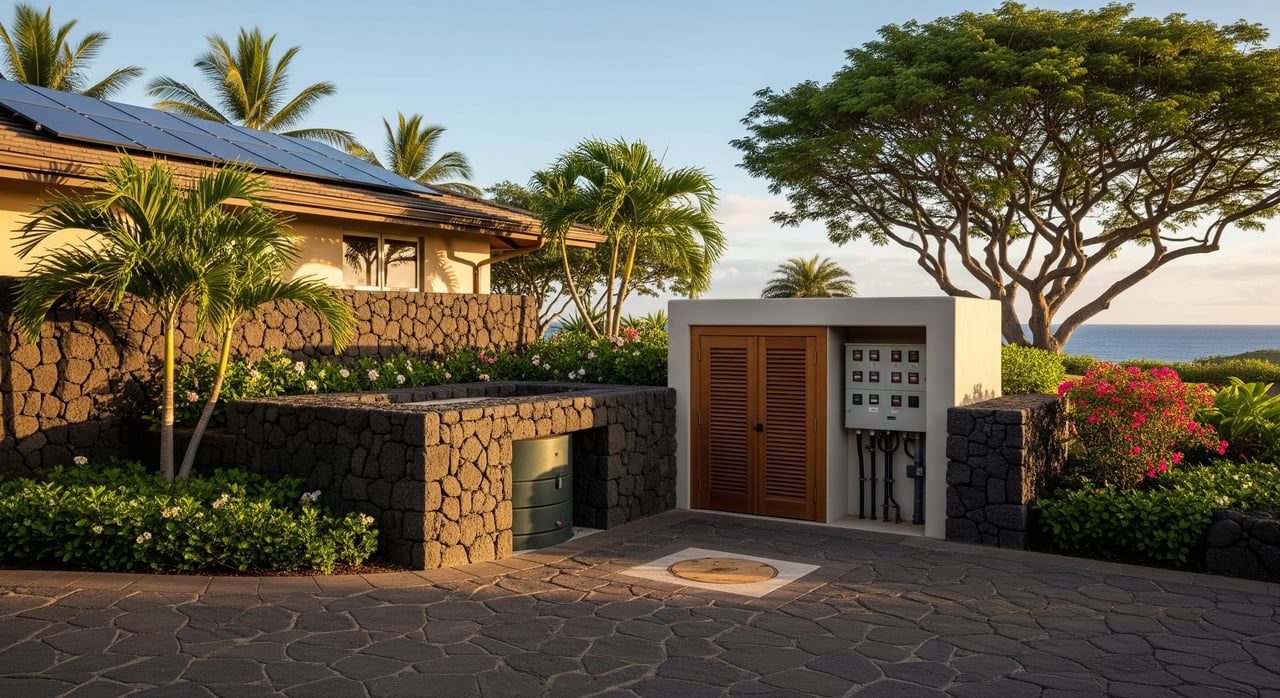
Projects that alter roof forms or height, change massing, adjust driveways, or add retaining walls usually receive deeper scrutiny. Solar panels, satellite dishes, and external utilities are also reviewed for placement and screening. When in doubt, ask for a pre‑submittal check.
The design review process
1) Pre‑submittal check
Schedule an informal conversation with HOA staff or the Architectural Review Committee. A short call or meeting can confirm what documents you need, highlight red flags, and save weeks of resubmittals. If your property is near the coast or on a slope, consult a county planner as well.
2) Formal submission
Submit a complete application packet per the HOA checklist. Include all plans, photos, fees, and contacts for your design professional and contractor. Incomplete packets are the top cause of delays.
3) Completeness and ARC review
The HOA first checks that your packet is complete. The ARC then evaluates aesthetics, materials, colors, rooflines, site placement, drainage, landscaping, lighting, screening, and how the project fits community standards.
4) Decision and conditions
Outcomes include approval, approval with conditions, denial, or a request for revisions. Conditional approvals are common. Expect items like additional landscape screening, drainage refinements, or construction logistics.
5) Appeals or variances
Some associations offer an appeal path. County variances are separate and follow county procedures. Ask about process and timing before you apply.
What to submit: a practical checklist
Administrative items
- Completed ARC/design review application and required fees
- Proof of ownership and contact details for you, your designer, and your contractor
Plans and drawings
- Site plan showing property lines, setbacks, existing structures, proposed work, driveways, and utilities
- Floor plans and exterior elevations with materials and rooflines
- Grading and drainage plan with any cuts, fills, and retaining walls
- Landscape plan with plant list, sizes, irrigation, fencing, and screening
- Material and color board or palette with samples or photos
- Roof plan for significant roof changes, solar layouts, or skylights
Technical and supporting documents
- Photos of existing conditions from multiple angles and street view
- Structural details for major additions or sloped sites
- Erosion and sediment control measures
- Tree protection plan and arborist report if significant trees are involved
- Drainage calculations or civil engineering for substantial grading
- Construction management plan covering staging, access, hours, dust, and parking
- Contractor license and insurance if requested
- County permit applications or confirmation of intent to apply
Optional but helpful
- 3D renderings or massing views to show visual impact
- Wind and storm mitigation details suitable for Hawaii’s building code
- Letters of support from neighbors for projects that may affect views or privacy
Timelines and planning
Every HOA and project is different, but these ranges are common when you submit a complete packet.
- Minor exterior updates like paint or rail replacements: roughly 2 to 6 weeks
- Moderate projects like landscape remodels, new lanais, or exterior remodels: about 4 to 8+ weeks including any comment cycles
- New construction or major additions: approximately 6 to 12+ weeks for ARC approval, plus additional time for county permits and engineering
- Resubmittals or conditions: allow 1 to 4 extra weeks per round
Build review time into your schedule and contractor agreements. Include contingencies for resubmissions and county permitting.
What reviewers look for
ARC decisions focus on visual compatibility and community standards. Reviewers typically evaluate:
- Scale and massing, rooflines, and setback conformity
- Materials and colors for roofing, siding, trim, windows, decks, and railings
- Site plan impacts like grading, driveway placement, and retaining walls
- Landscape choices, erosion control, and avoidance of invasive species
- Stormwater direction and drainage control
- Lighting intensity, spill, and color temperature
- Screening, fences, privacy, and placement of mechanical equipment
- Solar panels, dishes, and external utilities visibility
- Construction staging, access, dust control, and tree protection
Avoid delays and denials
Common pitfalls include incomplete packets, incompatible materials or colors, inadequate screening, drainage or slope issues, and starting work without approval. You can reduce risk by:
- Meeting early with the ARC and nearby neighbors to surface concerns
- Using materials and colors consistent with HOA palettes and nearby precedents
- Providing the right technical reports for sloped or sensitive sites
- Presenting clear construction logistics and cleanup commitments in writing
- Maintaining written approvals, stamped plans, and condition compliance photos
County permits and regulatory overlays
A smooth project aligns HOA approvals with county requirements. Check zoning setbacks, flood zones, shoreline or coastal rules, and grading or drainage standards. The Hawaii State Building Code and wind requirements can influence structural choices for lanais, roofs, and exterior elements. Plan your HOA submission to reflect these realities so reviewers see that your design fits the broader framework.
Working with designers and contractors
Princeville projects benefit from local expertise. Hire architects, landscape architects, engineers, and contractors who know the community standards and Kauai County permitting. Ask for examples of Princeville approvals they have completed. Keep one central project folder with approvals, stamped plans, permits, and correspondence for easy access during construction and for future resale.
Construction management and neighbor relations
Thoughtful logistics protect your timeline and goodwill. Provide a simple plan for staging and access, parking, dust, and noise. Share your schedule with immediate neighbors and the HOA before work starts. Document any tree protection and landscape restoration commitments so conditions are easy to verify at closeout.
Resale and value considerations
Approved, permitted improvements are easier to sell and inspire buyer confidence. Keep your ARC approvals, county permits, final inspections, and as‑built drawings. High‑ROI exterior upgrades that typically review well include covered outdoor living that complements the home, locally appropriate landscaping, refined entries, quality roofing within approved materials, and improved parking where allowed.
Avoid unapproved work or obvious departures from community character. Projects that block neighbor views, ignore drainage, or add maintenance burdens can reduce appeal. Sellers should disclose approvals and any unresolved compliance issues. Buyers should verify approval history during due diligence.
Owner’s quick‑start checklist
- Confirm the exact governing association and obtain current CC&Rs, design guidelines, ARC forms, fees, and processing times
- Book a pre‑submittal meeting with the ARC or HOA manager
- Identify any coastal, flood, or slope overlays and needed county permits
- Retain a local design professional experienced with Princeville and Kauai County
- Prepare a complete packet with plans, photos, samples, and technical reports
- Notify immediate neighbors early and request feedback or support letters where helpful
- Build HOA and permit timelines into your construction contract and schedule buffer
Smart questions to ask the HOA/ARC
- Which CC&Rs and design guidelines apply to my lot or building? Are there recent amendments?
- Is there an up‑to‑date checklist or sample approved application I can follow?
- What are typical review timelines and fees for small vs. large projects?
- Are pre‑submittal consultations available and how should I document guidance?
- What construction rules apply to hours, staging, parking, and dust control?
- Are there preferred or prohibited materials, colors, or plant lists?
- Do solar, satellite dishes, or energy systems require special approvals?
- What are the enforcement steps for non‑compliance and the appeals process if needed?
A thoughtful approach protects your design vision, manages risk, and supports long‑term value. If you would like a seasoned advisor to help align design, approvals, and resale strategy on Kauai’s North Shore, connect with the team at Rohn Boyd Luxury Real Estate.
FAQs
What is the Princeville design review and why is it required?
- It is the HOA’s process for evaluating exterior changes for consistency with CC&Rs and design guidelines, and it typically runs in parallel with required Kauai County permits.
Do I still need county permits if the HOA approves my project?
- Yes. HOA approval does not replace Kauai County permits. Most projects need both approvals before work begins.
How long does HOA approval take for a typical exterior update?
- Minor changes often take about 2 to 6 weeks when the packet is complete. Larger remodels or additions can take 4 to 12+ weeks including revisions.
What documents make for a complete Princeville submission?
- Include the application and fees, site plan, elevations, materials and color board, landscape and drainage plans, photos, technical reports as needed, and a construction management plan.
What are common reasons Princeville applications get denied or delayed?
- Incomplete packets, incompatible materials or colors, drainage or slope issues, inadequate screening, and starting work before written approval are frequent problems.
How can I reduce neighbor concerns about my project?
- Meet early, share visuals and screening plans, address drainage and privacy, and propose conditions like additional landscaping to mitigate impacts.
What records should I keep for future resale in Princeville?
- Keep ARC approval letters, stamped plans, county permits and finals, warranties, and any landscape maintenance plans required by your conditions of approval.
Should I hire local professionals for Princeville projects?
- Yes. Local architects, engineers, and contractors familiar with Princeville standards and Kauai County permitting can shorten timelines and improve outcomes.